I am going to compare the Garden Centre with the V&A Waterfront to use examples of how the two shopping centres differ from each other and how these spaces cater for different and, in some cases, for the same market. The Garden Centre is situated between flat blocks and houses that contain traditional households in the Gardens, Cape Town. The V&A Waterfront is placed between Granger Bay and Green point were it is positioned as a luxurious ‘town’ on its own that caters for a wide market of people with different fantasy attractions, but a major part is emphasized and concentrated on tourism. The V&A Waterfront includes and consists of an Aquarium, boat trips to Robin Island, helicopter trips, live African marimba music, an amphitheatre with live performances, a shopping centre with cinemas, restaurants and bars all combined into a wide range of entertainment. The V&A also represents and offers universal themes, nationalities and cultures. For example, the German restaurant and bar Paulanergarten or the Belgium restaurant and bar, Den Anker. The V&A Waterfront is a heterogeneous space. The V&A contains a few spaces that can be categorised in theory of simulacra, as introduced by Jean Baudrillard.


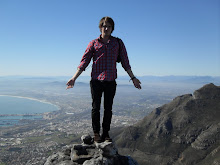
Fig. 1 (www.kinglyn.de/en/cape-town.html)
The Garden Centre is a double story shopping mall that is smaller than a fifth of the entire Waterfront’s space. The Garden Centre contains only the basic shops for household products and some human entertainment shops like Musica for example, but the compact disc consumed at Musica would not entertain you at the Garden Centre - the entertainment happens where the compact disc is used; car or home. It has no adventurous entertainment such as boat or helicopter trips. The Garden Centre has small café with German food, Picolo Café, but it offers only German food for local people to experience German food, rather than to, which in case of Paulanergarten, attract German people for a meal. The Garden Centre mall closes at nine at night; there is no pub or restaurant open at night for social gatherings, whereas the V&A has a variety of pubs and restaurants to socialise late at night. Each of these two spaces is carefully structured to achieve their purposes. The V&A is surrounded with paid parking spaces and offers no free parking for vehicles, only for motorcycles. A person that drives a usual vehicle and pay a visit to the V&A cannot leave without spending money. The Garden Centre has a paid parking (Fig. 3) space attached to the centre, but it is surrounded with public parking spaces that are free (Fig. 2) for normal vehicles. These two malls both have signs and symbols to navigate and help you fiend your way through the place to your entertainment or shop from choice. Malls are definitely not solely about shopping and consuming various products.


Fig. 2 Fig. 3
Malls, especially in the 21st Century, have become spaces of socialising, entertainment and a fashionable lifestyle pattern for some people. Lots of people desire an extravagant experience while they are shopping in a luxurious mall. They might feel associated and part of the splendid image the certain mall has manages to create in its existence. The V&A Waterfront has a sharp, grand, interesting and universal image if you look at the stores it offers in its space. For example, premium and fashionable brands like Aston Martin, Ducati (Fig. 4), Louis Vuitton and Guess. These stores stand out and add statement to the luxurious code that the V&A Waterfront offers. The Garden Centre has a witty, quick and quality personality that offers the most wanted products and services at standard and top level. For example, the Garden Centre has a Pick & Pay and Woolworths, MTN and Vodacom, Surf shop and female boutiques, a movie rental store, hair salon etc. These are all basic stores that are wanted by the people that lives near the Garden Centre.

Fig. 4
The V&A Waterfront is designed to ’stretch’ your stay by making you pass and notice shops and stores that you did not plan to pass or visit. For example, a group of male friends go to watch the soccer at Michelle’s Brewery, but they only have their debit cards with them and for matter of principle they do not want to pay food and drinks with their debit cards. They realise they must enter the shopping centre to go and draw a their amounts of money. While they are in the process of searching for an ATM in the centre they pass various shops. One of the guys might go into Total Sport, because his eye ‘accidentally’ caught the latest soccer wear of his favourite team. One of the other guys drop into Cape storm, because he felt cold of sudden breeze that cropped op from the sea side and wants to buy a jacket. Before the guys came back to Michelle’s Brewery, for their actual purpose of visiting the V&A to watch soccer, they might have bought several products without planning to. People get unconsciously persuade by falling into the ’consuming encouraging traps’ designed for shopping centres. We must keep in mind: “The fundamental structural import of the mall remains maximising retail profits” (Edwards, 2006:25).

(eslpod.com/eslpod_blog/wp-content/uploads/2007/12/shopping-mall.jpg)
The Garden Centre is much less persuasive in terms of making the consumer aware of all the shops. For example, at one of the four entrances is all the ATM’s (Fig. 5), so you can go draw money and leave immediately. The Woolworths is also at one of the entrances, so you can go and buy your household products, without passing other stores, and leave immediately.

Fig. 5
Both malls is ’Right of Admission Reserved’, which means this public space is set aside for a specific purpose and if you do something against the rules of the malls you can be prosecuted. These spaces look public, but it is under control with security guards and most times with surveillance cameras, that is found in the Garden Centre and the V&A Waterfront. The problems do not appear with fear of dangerous criminals that transgress the law, but rather with people that are considered as ‘outsiders’ and undesirable in these so-called public spaces. ‘Outsiders’ refers to people that is seen as low class and different by, for example, identity. Several shopping malls have established some kind of societies within the mall and these societies have their codes of identities which are acceptable and which not. The undesirable people that do not meet these codes of acceptance can be search or even ban from using the space.
(Body-Gendrot, 2006)


(zehnkatzen.blogspot.com/2008_06_01_archive) (www.funnystuff.net.an/ public-signs/)
People that is regarded as poor is unwanted and indirectly unwelcome and shopping malls and makes perfect sense (and is rather subjective) if you put yourself in the shoes of an owner of a mall. It is very unlikely that you as an owner of a mall would welcome people into your mall if you no they don’t have a single cent carried with them. One of the things that stood most out in comparison with these two malls is the fact that the Garden Centre is surrounded with baggers at every entrance most of the time I visit the mall and that is twice a week at least. There was even once a drug dealer directly outside the centre that wanted to sell marijuana to me. There are hardly beggars in sight at the V&A. This may be due to extremely strict security or the fact that the Waterfront is isolated and colonised as an extravagance town on its own. The V&A might signal signs for the underclass or “the other” (Edwards, 2006:28).

(creativemoments-lynette.blogspot.com/2009/10/choices.html)
People experience pseudo-public spaces naïvely. For Example, a domestic worker irons close in front of the television for a rich family in Hermanus. An advertisement appears of the V&A Waterfront and the domestic worker gets persuade by how incredibly fun and ‘magical’ this public space is. She is easily convinced with a denotative image and representation of how unbelievable this space is. The day when the domestic worker might get the change to visit the V&A Waterfront, she may be striked with reality that some people, perhaps in her case, is indirectly unwelcome as there are various signs and symbols that evoke this unwelcome impression. For example, the typical dress codes that represent expensive fashion statements or the entertainment activities with its high-priced fees. These kind of signs leads to segregation, not in terms of religion or race, but in terms of low class people and middle to high class people.

(delhi4cats.files.wordpress.com/2009/01/outsider-markers.jpg)
The above discussions of how pseudo-public spaces is constructed and operated conform to how we experience our segregated neighbourhoods as well. In Cape Town, for example, the Bo Kaap consists from coloured people, Tamboerskloof, Oranjezight, Gardens and Vredehoek consist mostly of middle class white people, Clifton and Camps Bay consist of wealthy people and further out of town is Khayelitsha and Nyanga which consist out of low-class black people. Cape Town is known as a multi-culture city. The different neighbourhoods are still more or less constructed in the traditional way where similar cultures and races live together. The city centre possibly is multi-cultured, but definitely not the neighbourhoods yet. According to Sophie Body-Gendrot’s Essay, ‘Is the concept of public space vanashing?’, more inclusive cities is a potential solution for tension among different cultures living in different spaces.
(Body-Gendrot, 2006)
Simulacra, according to Jean Baudrillard, are simulations or copies that are replacing the ’real’ artefacts so that increasingly reality becomes redundant and we no longer distinguish between the real and the representation of the real (Rayer, Wall & Kruger, 2004). The Paulaner beer garden is represented and set up that a customer experience the unique ritual or style of German beer drinking. The draught machines, the glasses, the layout of this space is designed and illustrated as a truly German pub in, for example, Berlin. The German glasses and draught machines are simulations and signs that the V&A Paulanergarten ( Fig. 6)use to replace the ’real’ - that is found in Germany. This is one of the forms of simulacra found at the V&A Waterfront.

Fig. 6
Shopping malls replaced parks and squares that were traditionally seen and used in the past as spaces for freedom of speech. Both the Garden Centre and the V&A Waterfront is not 100% public and democratic. There is freedom of speech and behaviour, but only till some degree. There is a sign on an entrance door at the V&A that represents the following forbidden acts inside the centre: No smoking, no pets, no cycling and no rollerblading (Fig. 7). Underneath these signs are the words: “Premises Protected by CCTV.” As shopping centre spaces replaced parks and squares, the Internet might replace shopping centres. I explain, for example, Pick & Pay has an online service for a fairly long period now where customers can order groceries on their website with delivery to their home. The record label, Rhythm Records, has an online download store, where you can download tracks from local artist’s albums. The current rate is R7 per track. No need to buy a compact disc with only three tracks that you like. Why waste time and go to Musica if you can download music in the comfort of your own home? Social networks like Facebook and Twitter enables a person to express him/herself freely, no need to go to a public space. You can view latest movies on Youtube, so there is no need to go and view a movie on the cinema. Conferences is no longer necessary to be held at the V&A Waterfront; a person in Perth, Toronto, New York and Paris can all participate in a conference over Skype that is held in Cape Town. It is very odd and absurd to predict that the shopping mall will disappear, but the above-mentioned statements could contribute to a disappearing of the ‘shopping mall’ in twenty years time.

Fig. 7
In conclusion shopping malls, as pseudo-public spaces, uses various signs and artefacts to create their own unique image and levels of luxurious judgements. This is known as ‘bricolage‘ (Rayer, Wall & Kruger, 2004). The ’shopping mall’ is a space that is comfortable for middle class and wealthy people, because most of their needs are combined into one space. Unfortunately this space is set aside and not everyone is directly welcome…
Bibliography;
Body-Gendrot, S. 2006. ‘Is the concept of public space vanishing?’,Newspaper Essay: Berlin, November.
Edwards, P. Citizenship Inc: Negotiating Civic Spaces in Post-urban America. Critical survey volume 18, number 3.
Rayner, P, Wall, P, & Kruger, S. 2004. AS Media Studies. Routledge. Taylor and Francis group.
Pictures:
(creativemoments-lynette.blogspot.com/2009/10/choices.html)
(delhi4cats.files.wordpress.com/2009/01/outsider-markers.jpg)
(eslpod.com/eslpod_blog/wp-content/uploads/2007/12/shopping-mall.jpg)
(www.kinglyn.de/en/cape-town.html)
(www.funnystuff.net.an/ public-signs/)
(zehnkatzen.blogspot.com/2008_06_01_archive)
Fig. 1 - Fig. 7 captured by JH van Wyk (Me)

No comments:
Post a Comment